


Triple Hunt - triple match!
4.543.00 Reviews
App Specs
- Version
- 26.08.12-google
- Updated On
- License
- Free
- Downloads
- 10,000+
- Developer
- ENJOY GAMES
- Categories
- Puzzle
- Platform
- Android
Screenshots
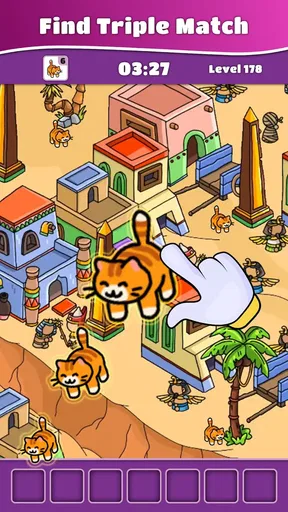
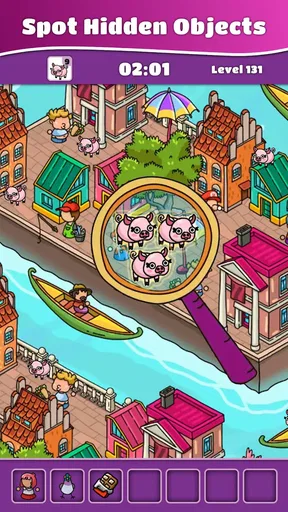
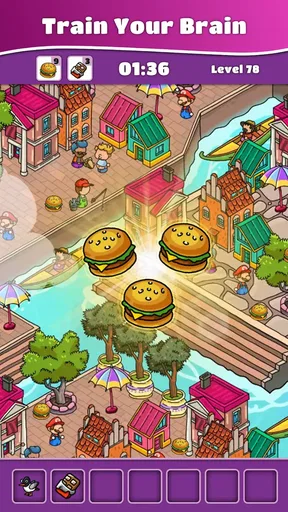
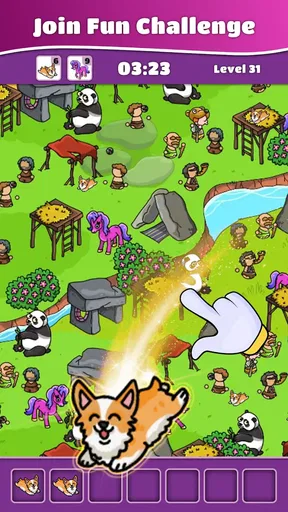
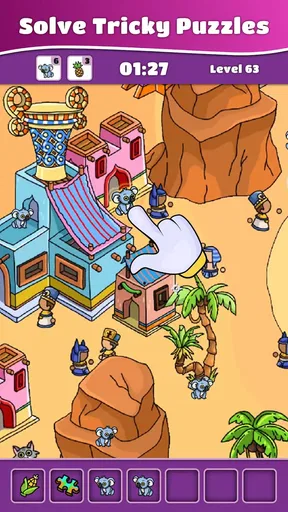
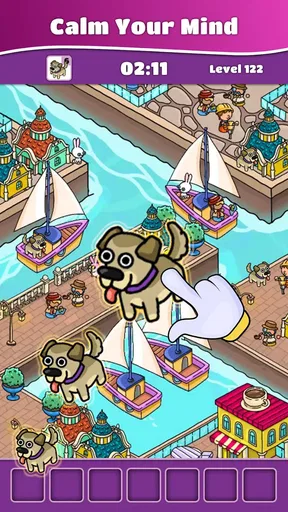
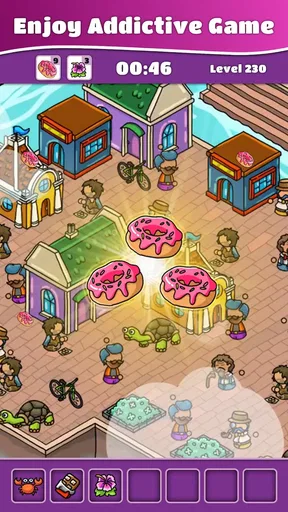
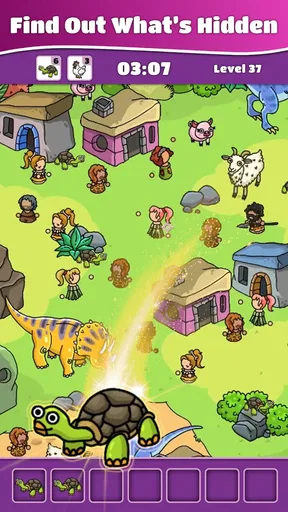
 Analysis by AppCompare
I spent time with Triple Hunt - triple match! as a small, easy-to-pick-up puzzle game, and its appeal is clear within the first few rounds. The basic idea is to look through miniature scenes, find objects that belong together, and complete sets of three. That combination makes it feel more active than a standard matching board while remaining simple enough for a quick break. It is free to start, rated for Everyone, and made by ENJOY GAMES.
What I like most is that the game fits naturally into shared moments. Someone can hand over a phone after finishing a level, another person can search the same kind of scene, and neither player needs a long explanation before getting started. It is not the sort of puzzle I would choose for deep strategy or a long uninterrupted session, but it works well when I want something visually focused and uncomplicated.
How Triple Hunt works when a household shares one device
The game’s central loop is built around observation rather than complicated controls. I scan a small world, identify objects that can form a matching trio, and tap them as I find them. The “triple” rule gives each search a clear purpose: I am not collecting anything at random, and I have to pay attention to whether an object really belongs with the other two.
That makes it particularly suitable for a shared phone or tablet. In a household, one person can search the upper part of a scene while another points out a possible item near the bottom. Younger players can participate by spotting familiar shapes, while an adult can handle the taps or explain why three objects match. The game does not need to become a formal competition; it can simply be a short cooperative activity between errands, during a quiet evening, or while waiting for dinner.
I found that the best shared-device sessions are brief and turn-based. One player searches for a few moments, then passes the device to someone else. This avoids the common problem where one person controls the entire screen and everyone else becomes an audience. Because the action is based on visual searching, even a person who is not holding the device can remain involved by calling out likely matches.
There is also a useful difference between playing alone and playing with someone else. Alone, I can settle into a calm scanning rhythm and make decisions at my own pace. With another person, the same scene becomes a conversation: one player may notice an object quickly, while the other may be better at checking whether it completes a set. That makes the game more flexible than a typical match-three board, where everyone mainly watches the same chain reactions.
What to decide before passing over the phone
Triple Hunt is straightforward to launch, but a shared device still benefits from a simple routine. I would decide in advance whether the session is cooperative or whether players are taking separate turns. Without that boundary, the fastest person may tap everything first, leaving little for anyone else to do.
Worth Reading Before You Choose

Switching to Android Auto Means Rethinking Your Driving Routine

Google Calendar Makes a Crowded Week Easier to Manage

Baby Panda World Brings Quick Play to Modern Phones, but Its Game Library Feels Busy

ESPN’s Live Game View Makes Following Close Games Easier

QuizzLand Review: A Good Fit for Short Trivia Breaks, Not Every Player

Basketball Stars: Multiplayer Is Fast, but Can It Recover When Matches Go Wrong?
A practical approach is to give each player one search turn rather than one whole level. That keeps the experience balanced and makes it easier to stop when the household needs the device for something else. If a child is playing, I would also agree that an adult checks any purchase prompt before continuing. The game is free, but optional in-app purchases range from $0.99 to $119.99 per item, so the device owner should remain the person who approves spending.
This is one of the areas where the game’s simplicity can create a false sense of safety. The Everyone content rating describes the general age suitability of the game, not who should be allowed to make purchases on a shared device. I would treat those as separate questions: the visual puzzle may be appropriate for a broad audience, while payment decisions still belong with the account holder or supervising adult.
I also recommend agreeing on whether hints, retries, or other progress-related choices are personal decisions or household decisions. I am not assuming that the game provides family profiles, child locks, or separate save spaces, so I would not use one shared device as if it were a multi-account system. The safest workflow is simple: the owner keeps control of the store account, and other players use the game only with permission.
Keeping progress and expectations clear
Shared play becomes frustrating when people assume the game remembers each person separately. Unless you have checked how the current installation handles progress, it is better to think of one device as one playing space. I would avoid promising a child that a particular level or achievement belongs exclusively to them unless the household has agreed on a way to track turns outside the game.
A small paper note or a household agreement can solve more than people expect. For example, players can write down whose turn comes next, or agree that the person who starts a scene gets the first search while everyone else helps. This is not a feature of the app; it is a useful way to prevent arguments when the same installation is used by several people.
The current version is 26.08.12-google, and it requires Android 7.0 or later. That makes checking the device before installing worthwhile, especially if the shared phone is older. A game can be perfectly suitable for the family and still be unavailable on a particular handset because its operating system is too old. On a compatible device, the low-complexity format should be easier to introduce than a puzzle with elaborate controls or a demanding interface.
For a household with both Android and iOS devices, I would also avoid assuming that progress automatically follows a player from one platform to another. The sensible expectation is to treat each installation as its own place to play unless the app clearly explains otherwise. That matters if one family member starts on a personal phone and later moves to a shared tablet.
Why coordination matters more than speed
The strongest household use case is cooperative searching. Instead of asking who can finish first, I would give each person a role. One player can scan for objects near the edges, another can look for repeated shapes in the center, and a third can confirm whether a possible trio is complete. These roles can change from round to round, so the youngest participant is not always reduced to watching.
This approach also exposes one of the game’s quiet strengths: it encourages visual discussion. Players have to describe what they see, not merely react to a falling tile or a flashing bonus. Saying “there is another one beside the small structure” is part of the activity. That can make the game more engaging for a parent and child than a puzzle where the best move is obvious only to the person holding the phone.
At the same time, coordination has a limit. If several people shout suggestions at once, the search becomes noisy rather than enjoyable. I found it better to use a single caller or to let the device holder make the final decision. This is especially helpful when a scene contains many small details and everyone is trying to point at a different object.
For siblings, I would use short, clearly defined turns. A player who searches until they are finished may unintentionally dominate, particularly if they are older or more familiar with hidden-object games. A timer could create pressure, so I would not introduce one unless everyone enjoys that kind of challenge. The game’s value in a household is its accessibility, and turning every round into a race can remove that advantage.
Age, trust, and the difference between suitable and supervised
The Everyone rating makes sense for the basic puzzle concept: the activity is about finding and matching objects in small scenes, not about mature themes. That makes it a reasonable candidate for a family device where adults and children may both want something light to play. Still, age suitability does not answer every practical question a parent may have.
For younger children, I would focus on whether they understand the device rules. Can they wait for a turn? Do they know not to approve a payment? Can they stop when the owner asks for the phone back? Those questions are more relevant to shared use than the puzzle mechanics themselves. An adult may want to play alongside a child at first, not because the game is difficult, but because the child is learning how the shared device is managed.
Trust also matters when several adults use the same installation. One person may enjoy spending a little on optional items, while another may want the game kept entirely free. Since the app is free to download but includes paid items, the household should establish that preference before anyone plays. I would never treat a saved payment method as permission for every player.
Another sensible boundary is notification and interruption etiquette. If the phone is also used for calls, school messages, work, or navigation, a player should pause and return it immediately when the owner needs it. Triple Hunt is well suited to short sessions precisely because it does not require the household to reserve a whole evening for it. That makes it easier to fit around real responsibilities.
I would be more cautious about recommending it as the main game for a child who needs a clearly separated personal profile, robust parental controls, or tightly managed progress. I am not going to pretend that a shared installation provides those boundaries. For that situation, a platform or game with explicit account separation would be a better choice, even if its puzzle design is less appealing.
How it compares with ordinary matching and hidden-object games
Triple Hunt sits between two familiar puzzle styles. Traditional match-three games usually present a fixed grid and ask the player to create combinations by swapping or arranging pieces. Hidden-object games, by contrast, focus on locating items in a detailed picture, often without the same emphasis on forming groups. Here, the search itself is central, but the player also needs to recognize a trio.
That blend changes the pace. I spend less time planning a long chain reaction than I would in a strategic match-three game, but I spend more time examining the scene. The result is a gentler experience for players who enjoy noticing details and a less satisfying one for anyone who wants complex board management, competitive scoring, or carefully planned combos.
Compared with a pure hidden-object title, the matching rule gives me a clearer next step. I am not simply hunting for a checklist of unrelated items; I am looking for relationships between what I see. That helps the game feel purposeful, though it can also make a crowded scene tiring if I lose track of which object belongs to which group.
For a commuter or someone taking a short break, the game is likely a better fit than a puzzle that demands a long chain of decisions. For a dedicated puzzle fan looking for increasingly difficult logic, a number puzzle, word puzzle, or more strategic match-three game may offer greater depth. I would choose this one for visual relaxation and shared play, not for serious mental competition.
Small habits that make the search easier
My first useful habit was to scan the scene in sections instead of jumping randomly between objects. I start at one edge, move across the image, and then repeat from another direction. This reduces the chance of overlooking a matching item that is close to the first one but hidden among unrelated details.
A second habit is to remember the shape and color of a possible object before tapping. When I immediately chase every interesting item, I lose the thread of the search. Holding one visual clue in mind for a few seconds helps me look for its companions rather than collecting distractions.
When playing with another person, I would ask for location-based clues instead of vague instructions. “Near the upper-left corner” is more useful than “I saw another one.” This makes cooperation faster without turning the scene into a shouting match. It also gives younger players a way to contribute even when they are not confident enough to choose the item themselves.
I would also avoid spending immediately when a round feels difficult. A short pause and a second scan often reveal details that were missed on the first pass. Because the game is built around observation, rushing can create the impression that a purchase or extra assistance is necessary when the real problem is simply looking too narrowly.
Who will enjoy it, and who should skip it
I would recommend Triple Hunt to casual puzzle players who like searching through illustrated scenes and want rules that can be explained in a sentence. It is especially appealing for households that share a tablet or phone, because people can cooperate without needing separate controllers or a lengthy tutorial. Its free entry point also makes it easy to try before deciding whether the optional purchases fit your preferences.
It is a good match for someone who enjoys a calm visual task after work, a parent looking for a simple activity to do with a child, or friends who like pointing out details together. The 4.5 average from around 844 ratings suggests that the existing audience has responded positively, while the 10K-plus install level places it among smaller, less established games rather than a massive mainstream title.
I would skip it if you want a deep competitive system, a story-driven adventure, or a puzzle that rewards long-term planning above all else. I would also look elsewhere if separate household accounts, personal progress tracking, or strong built-in family management are essential. Those needs should be settled before installation rather than discovered after several people have started using the same device.
There is a further trade-off for players sensitive to optional spending. The wide purchase range means the free starting point does not tell the whole story of the commercial model. I would play with purchases disabled at the device level if that is the household preference, or at least keep the account owner involved whenever a paid option appears.
My household verdict
Triple Hunt works best when I treat it as a shared visual puzzle rather than a personal progression game. Its tiny scenes invite conversation, and the trio-matching goal gives everyone something concrete to search for. A short turn-taking rule, a clear purchase boundary, and realistic expectations about one shared installation are enough to make it comfortable for many households.
The developer, ENJOY GAMES, has chosen a concept that is easy to understand but not completely interchangeable with a standard match-three board. I enjoy the way the game asks me to inspect a scene and connect objects, and I think that makes it more social than its simple controls might suggest. The main limitation is not the core search; it is the need for the household to manage account ownership, progress expectations, and spending around the game.
My final recommendation is positive for casual players who want a free puzzle to dip into alone or share with someone nearby. I would install it on a compatible device, explain the turn order before passing it around, and keep payment decisions with the account holder. Its best feature in a shared home is not speed, but the way three small matching objects can turn one phone into a cooperative search.
For a personal device, I would judge it by whether visual searching remains enjoyable after the novelty of the scenes wears off. For a family device, I would judge it by whether everyone can respect the same boundaries. If both answers are yes, this is an easygoing puzzle worth trying; if you need deep strategy or formal account separation, a different category of game will serve you better.
Pros
- Simple triple-matching rules are easy for new players to understand.
- Short levels make it convenient for quick gaming sessions.
- Colorful visuals give the board a cheerful
- accessible appearance.
- Increasing challenges help maintain interest beyond the opening levels.
- Offline play is useful when you have limited or no internet access.
Cons
- Later boards can feel repetitive if you prefer more varied puzzle mechanics.
- Limited moves may make some stages feel dependent on careful planning.
- Small tiles can be difficult to distinguish on compact phone screens.
- Progress may slow considerably after the easier introductory levels.
- Optional purchases may appeal to players who want faster assistance.
FAQs for Triple Hunt - triple match!
What is Triple Hunt - triple match!?
Triple Hunt - triple match! is a casual puzzle game based on the familiar triple-matching formula. You search through a busy collection of objects, select three identical items, and clear them from the board. As levels progress, layouts become more crowded and time or move limitations may add pressure. It is designed for short play sessions, although the increasing difficulty can make later stages surprisingly challenging.
How do you play Triple Hunt - triple match!?
The basic gameplay is easy to understand: tap matching objects and create groups of three to remove them from the screen. The main challenge is recognizing useful combinations while keeping enough space available for future moves. Before tapping randomly, it helps to scan the entire board, uncover blocked items, and plan several matches ahead. Careless selections can quickly fill the available tray and end a level.
Is Triple Hunt - triple match! free to download and play?
Triple Hunt - triple match! can generally be downloaded at no initial cost, but the free version may include advertising, optional purchases, or other limits depending on the platform and current release. These extras can support additional boosters, lives, hints, or faster progress. Before installing, check the official store listing for the latest information about in-app purchases and whether payments require confirmation.
Can Triple Hunt - triple match! be played offline?
Some puzzle levels may remain playable without a continuous internet connection, which makes the game convenient for travel or quick offline sessions. However, features such as advertisements, cloud synchronization, events, leaderboards, updates, or purchases may require internet access. Offline availability can also change between versions, so it is best to test the game after installation rather than assuming every mode and reward will work without a connection.
Is Triple Hunt - triple match! suitable for children and casual players?
The simple tap-to-match controls make Triple Hunt - triple match! approachable for casual players and beginners, and there is no complicated control system to learn. Nevertheless, parents should review the store age rating, advertising behavior, and in-app purchase settings before giving it to a child. Later puzzles may demand concentration and planning, while frequent rewards or timed challenges may encourage longer play sessions.


